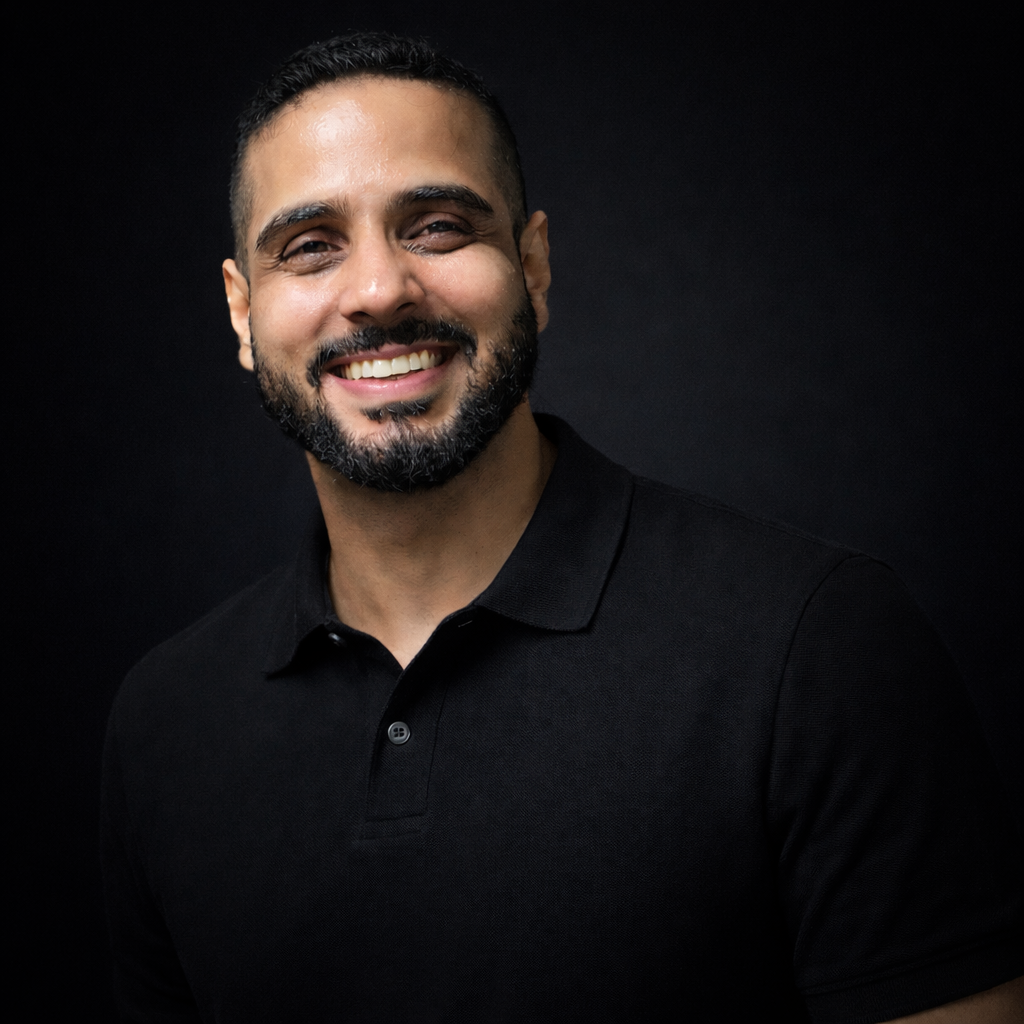
About
I build enterprise systems that actually work and tell stories that actually matter. My journey into technology started in a roundabout way: I was the kid who spent Saturday mornings dismantling VCRs to understand how they worked, then spent Saturday afternoons trying to reassemble them before anyone noticed. That instinct to take things apart, understand the mechanics, and put them back together in better shape has defined my career ever since.
For the past ten years, I have been deep in the Salesforce ecosystem, architecting platforms for financial services firms, healthcare networks, and high-growth technology companies that need their systems to scale without fracturing under pressure. I have led implementations that touched hundreds of thousands of records, migrated legacy CRMs with decades of accumulated technical debt, and designed integration architectures that stitched together six or seven disparate systems into something that actually felt seamless to the people using it. The work is never glamorous from the outside, but there is a deep satisfaction in building something that ten thousand users rely on every day without ever thinking about what is happening underneath.
But I have never been just one thing, and the emergence of large language models pulled me into an entirely new orbit. Since 2023, I have been building AI-powered tools and agentic workflows that sit at the intersection of enterprise architecture and artificial intelligence. RAG systems that make corporate knowledge bases actually searchable. Document intelligence pipelines that extract structured data from chaotic PDFs. Autonomous agents that handle multi-step business processes that used to require three people and a Slack thread. I believe the next decade belongs to practitioners who can bridge the gap between serious enterprise platforms and the new capabilities that AI makes possible.
Photography keeps me honest. It is the practice of seeing, of noticing light, geometry, and fleeting human moments that most people walk past without registering. Where systems architecture is about controlling complexity, photography is about surrendering to it, trusting your eye and your instincts in the fraction of a second before the moment dissolves. My camera goes everywhere I do, and the discipline of shooting has made me a better architect. Both practices demand the same core skill: the ability to see the essential structure beneath the surface noise.
I am driven by a simple belief: the best technology disappears into the background so completely that people forget it is there, and the best stories bring something to the foreground that you did not know was waiting to be seen. Everything I build, every system I design, every photograph I take is in service of that idea.
The most elegant architecture is the one nobody notices. When technology works the way it should, people stop thinking about the system and start thinking about the work that matters.
Azlan AllahwalaWhen I step away from the keyboard, you will usually find me with a camera in hand. I have been working on a long-term photography project documenting how natural light transforms urban spaces across different cities and seasons. The project has taken me through Sydney, Lisbon, Istanbul, Marrakech, and a dozen other cities where the relationship between architecture and light tells a story that words cannot quite reach.
I am an avid reader, mostly nonfiction: systems theory, design philosophy, cognitive science, and the occasional long biography of someone who built something that lasted. I keep a running list of books that changed how I think, and I am always looking for the next one. I also run, not fast and not competitively, but consistently. Trail running in particular has become a form of moving meditation that clears the noise and resets my thinking when a hard problem has me stuck.
I cook with more ambition than skill, mostly South Asian and Middle Eastern dishes learned from family recipes that were never written down. I am slowly trying to document them before they disappear. I also volunteer as a mentor for early-career developers through PepUp Tech, because someone gave me a chance when I was starting out, and I believe in paying that forward.
Building at the intersection of enterprise platforms and AI. My current consulting work focuses on helping organizations move beyond basic Salesforce implementations into intelligent, AI-augmented systems: platforms that do not just store data but actively surface insights, automate decisions, and learn from the patterns in their own usage. I am particularly interested in how agentic AI frameworks can transform the way businesses interact with their CRM, turning passive record-keeping into proactive, context-aware workflows.
On the AI side, I am deep in experiments with multi-agent architectures, exploring how teams of specialized LLM agents can collaborate on complex enterprise tasks like contract analysis, customer health scoring, and revenue forecasting. I am also building open-source tooling that makes it easier for Salesforce developers to integrate LLM capabilities into their existing Apex and LWC codebases without needing a PhD in machine learning.
On the photography side, I am shooting the third chapter of my urban light series, currently focused on how winter light in northern cities creates an entirely different visual language than the harsh, high-contrast light I captured in North Africa and the Mediterranean last year. The project will eventually become a printed book.
I am open to consulting engagements, advisory roles, speaking invitations, creative collaborations, and conversations with anyone building at the edges of what technology and storytelling can do together.